A New Start
We met in 2008, having both left long marriages that hadn’t worked out.
My Jane had five children, aged between 13 and 20 at the time, and I had one son, who was 13.
We met through internet dating. Neither of us was really looking for anything particularly serious at first — it was supposed to be a bit of fun. But we clicked.
Both of our previous spouses had been considerably older than us, and we enjoyed discovering how many familiar experiences we had from our younger days. We shared musical tastes, had very similar intelligence and, perhaps most importantly, seemed to understand each other.
Of course, each of us had a personal “history”: things we’d done, things we’d suffered, and things we’d never shared with anyone else. As we got to know each other better, we found that we could talk about those things quite easily. We were able to put them to bed — to slay our demons, so to speak.
We married in 2010. As My Jane put it:
Tim made the 2nd most important decision in his life marrying me. His first was saying yes to me when I proposed to him.
It was absolutely the right thing for us, and we never looked back.
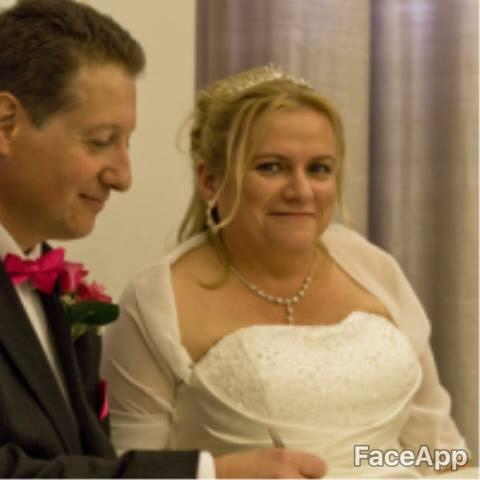
We were soul mates, without a doubt. We knew it. Everyone knew it.
My Jane was happy and deeply loved. I was happy and much loved. Our children knew that we were the happiest we’d ever been, and our friends and family knew it too.
It was meant to be.
We were very lucky to have found each other.
The Good Years
We started a business and ran it together. We did up a few houses, moved a few times and, most importantly, enjoyed life.
Our combined families were always at the heart of everything we did.
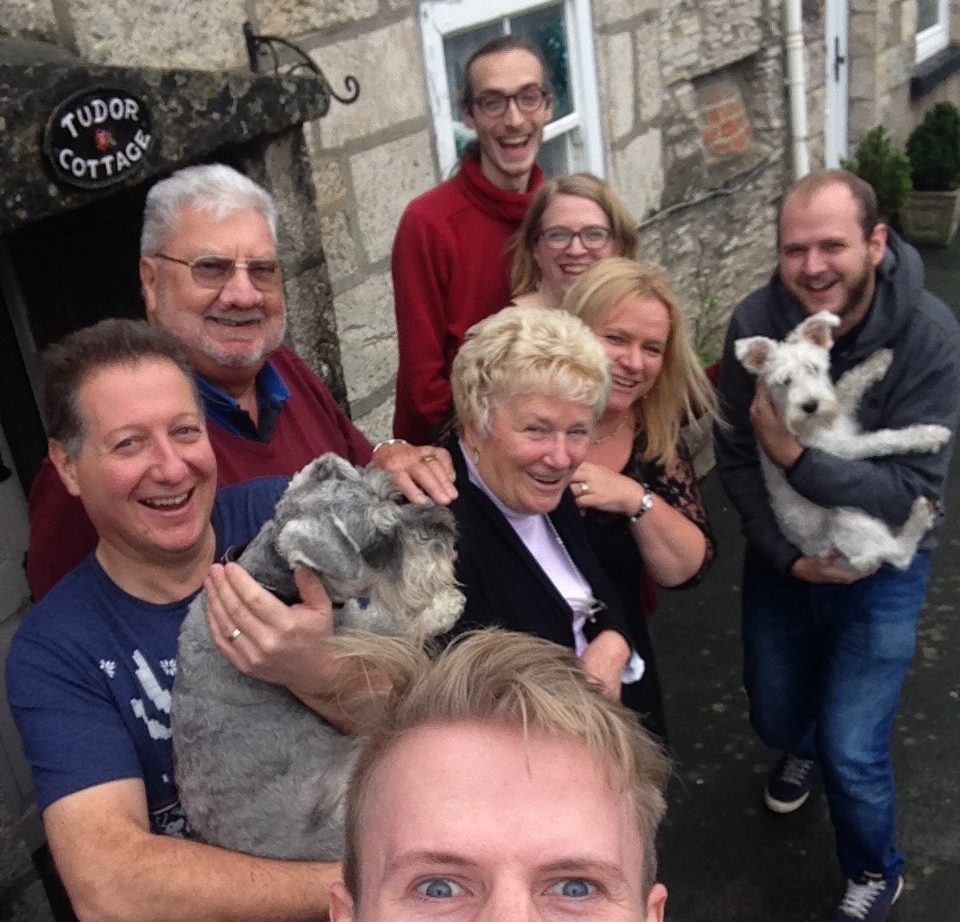
We loved every moment of it.
And I don’t think we ever argued.
The Beginning of Our Bad Stuff
In 2022, My Jane was diagnosed with head and neck cancer at the base of her tongue (oropharyngeal cancer). Treatment involved chemotherapy — which was, unsurprisingly, not nice — followed by more than 30 sessions of radiotherapy every weekday, all at a hospital over an hour’s drive from home, .
One of our boys was living with us at the time, between jobs, and he did the majority of the hospital runs while I did my best to keep the business running.
It worked.
Over the next few years there was no sign of the cancer returning. Fingers crossed, it had been dealt with, and we expected to get on with our lives.
Family Bad Stuff
The period from 2022 to 2024 brought more than its fair share of bad times.
My Jane lost:
- her dad
- her mum
- a brother, who died of oesophageal cancer aged just 50
- a brother-in-law, who died of lung cancer
- a brother-in-law, who died from complications during heart surgery in Spain
And then there was our charismatic Miniature Schnauzer, Eric, who died at the age of just eight.
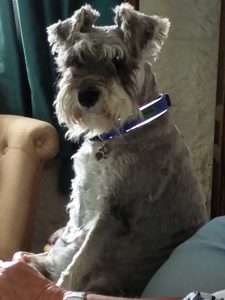
What could get worse?
Surely we’d had our fair share of “bad stuff”.
The Beginning of the End
Like so many people, we had realised that life is short and should be cherished.
We had already begun winding down our business in 2022/23, giving up the 1,000 sq. ft. unit we’d had for years. Then, in 2024, we moved into a manageable little flat, closer to our three youngest children.
We could work from home, and we were gratefully easing ourselves towards what we hoped would be an early retirement.
Nope.
This was not the hand of cards we’d been dealt.
About six months after the move, My Jane became concerned about occasional lung pain. During a routine visit to a GP practice nurse, she was found to have a fever and some other worrying signs.
She was immediately sent to hospital with a suspected pulmonary aneurysm.
It wasn’t that.
But referrals were made, tests were run, and eventually came the diagnosis:
Lung cancer
This was a new primary cancer, rather than a secondary spread of her previous head and neck cancer.
A biopsy was inconclusive. There were further tests, and delays that, perhaps, should have been avoided. Cancer, after all, doesn’t respect consultant’s Christmas holidays.
By the time everything was finally established, an operation to remove the cancer was no longer possible. It had progressed too rapidly – if 4 months of it growing from the initial referral is the definition of “rapid”.
In early 2025, My Jane started another course of 36 radiotherapy treatments, with a few chemotherapy sessions thrown in for good measure.
At least this time we were only 20 minutes from the hospital.
All seemed good.
Been there, done that. Let’s get on with it!
As soon as treatment finished, we travelled to Austria where Jane’s eldest lives to meet our new grandson — our second grandchild.
That trip made the whole marathon worthwhile.
A few months later, we went ona holiday in the sun to give Jane a chance to recuperate properly.
Not So Good After All
But by then, My Jane had become aware that movement was painful, and the stairs at the villa were becoming difficult for her.
She’d had a knee replacement a few years previously and had been waiting for the other knee to be rescheduled after her 2022 cancer treatment, so perhaps that was the explanation?
It wasn’t.
It turned out to be metastatic cancer in her right hip.
The hip was treated with short session of SABR radiotherapy. Thankfully, it helped a lot.
So we did what we’d always done.
We shrugged and got on with life.
Start of the End
We managed another trip to Austria in the autumn for our granddaughter’s seventh birthday. And a week in Malta – why not!
Then the left hip started hurting.
Another CT scan showed nothing.
An MRI was arranged — pushed for, in truth, by My Jane herself. She just knew something wasn’t right.
She was right.
We discussed things and agreed that I would give up all pretence of trying to work. Instead, we brought forward planned improvements to our flat, as My Jane was becoming increasingly dependent on a wheelchair and other mobility aids.
Then, on 26 November 2025, we were told that the MRI had shown cancer in the left hip after all.
With the further spread of the secondary cancers, My Jane was diagnosed as having terminal cancer now.
We were given an estimated life expectancy of less than 12 months.
Treatment would now be palliative.
Planning for the End
Life insurance was claimed and paid out. At least we could use the money to make My Jane’s remaining time as pleasant and as easy as we possibly could.
And we began, slowly and reluctantly, to plan for her death.
Trips to see people for the last time.
Funeral arrangements.
Financial arrangements.
Things that didn’t seem real.
But we did them.
It Gets Worse
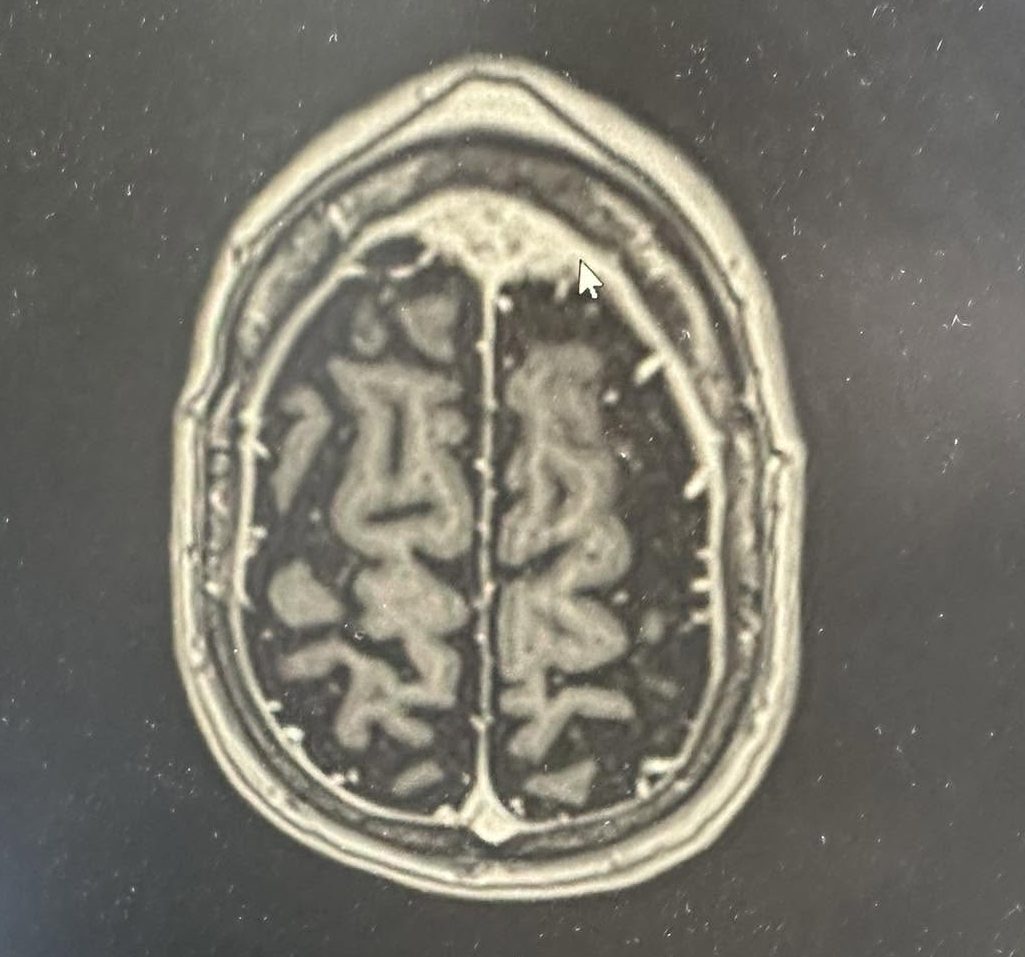
During treatment for the left hip, a lump appeared on My Jane’s forehead.
Eventually it was scanned.
It hadn’t spread into the brain, but it was causing pressure, and yet more radiotherapy was needed to halt its growth.
Its effect on her thought processes — and on her general wellbeing — was already becoming apparent to me.
Despite everything, we managed two more trips to Austria.
We also made a trip to Nottingham to see Jane’s two oldest boys, whom we hadn’t seen for more than seven years.
It was a lovely, long weekend catching up with them both, especially for their Mum after such a long time.
Losing My Dad
In March 2026, my father died.
My Jane was determined to attend the funeral, and somehow she managed it.
But, what we later discovered was a flare-up of diverticular disease, exacerbated by pain killers (ibuprofen most likely), resulting in a middle-of-the-night dash back home from our AirBNB. This was followed by a stay in hospital to get things under control and to try and improve her pervasive pain.
The immunotherapy treatment due to start was postponed.
There were, however, referrals to see whether surgery might be possible to stabilise or otherwise improve her fragile hips to reduce the pain and restore some mobility.
The doctors had been planning to withdraw the Oramorph and morphine tablets to try other forms of pain management, such as gabapentin.
But it became obvious that this was no longer possible.
A syringe driver was introduced so that the correct morphine dosage could be established more quickly, with the intention of eventually switching back to a matching oral dose.
April 2026
April was mostly spent with My Jane being bed-bound and in pain.
But we absolutely took advantage of every day she was well enough to do something.
A lunch out with me or her friends.
A drive to see the sea.
Shopping for whatever food took her fancy – she wanted to eat but nothing seemed to be right so we happily bought anything that appealed in the hope it would “hit the spot” 1.
Anything that gave us a little bit of normal life.
And I provided loving care for her to the best of my ability.
The syringe-driver dose was increased, and increased, and increased again.
The Oramorph top-ups continued to be necessary.
To me, the side effects seemed to completely outweigh the (lack of) pain relief it provided. But we stuck with it, believing that our local Macmillan team would eventually get things under control.
And there was still the possibility of hip surgery, once the consultants had decided on a plan.
The Final Few Days
On the morning of Monday 11th May, after a particularly bad weekend, I woke up with the realisation that I simply couldn’t manage caring for My Jane at home any longer.
I felt helpless.
Quietly, I phoned the Macmillan support line for advice.
A while later, My Jane woke up, called to me and told me that she couldn’t cope with it any more.
As had so often happened during our marriage, our thoughts had been completely in synchrony — without either of us sharing what we were thinking.
Macmillan had suggested that a few days in the hospice for a “medication review” would be useful, if My Jane agreed.
They were confident they could get the pain under control as there were plenty of medications still to try.
My Jane readily agreed and she packed some summer dresses because the hospice had a lovely garden to sit in, and we both saw it as just a few days away — a respite for both of us.
Neither of us realised what those few days would become.
The End of The End
I left her at the hospice at 6 p.m. that evening.
They were about to administer the first dose of the new pain medication they were going to try.
About 30 minutes later, from home, I chatted with her briefly on WhatsApp to make sure everything had gone well.
The conversation was cut short because the nurses had just come to check on her.
I received no further response.
Good, I thought as she must finally be getting some much-needed rest.
The next morning, I went in to see her.
She wasn’t on the ward.
Panic
What on earth had happened?
Why hadn’t I been called?
Last Few Days
She had been moved to a private side ward because she’d become extremely distressed during the night and the nurses had needed to heavily sedate her.
I met with the doctors and they told me that things were not looking good.
They had also chased up the hip/bone consultants, who had concluded that surgery would not be possible after all as her bones were simply too badly damaged by the cancer and/or the radiotherapy.
Over the next few days, she had a few brief moments of wakefulness and managed to see many of her family and friends.
I sat with her for as much time as I possibly could, along with the three boys who lived closer to us.
We knew it was the end.
But I don’t think you ever really — or fully — accept that it is happening.
On the night of Thursday 14th May at around 11 p.m., the three of us left.
My Jane was resting, peaceful and calm, following some distress during the afternoon which had required an increase in her sedation. Youngest is a paramedic and he absolutely made sure his Mum was being looked after!
We joked that, knowing her dogged determination to hold on to and wring the most out of life — something we’d seen so many times before — she’d most likely still still be lying there for days and days.
But a few hours later, I received the call urging me to come back in quickly.
I did.
But I was five minutes too late.
My Jane had died.
I had missed her passing by just five minutes.
- If someone seems to be dying because they are not eating it is more likely that they are not eating because they are dying, I understand this now. ↩︎